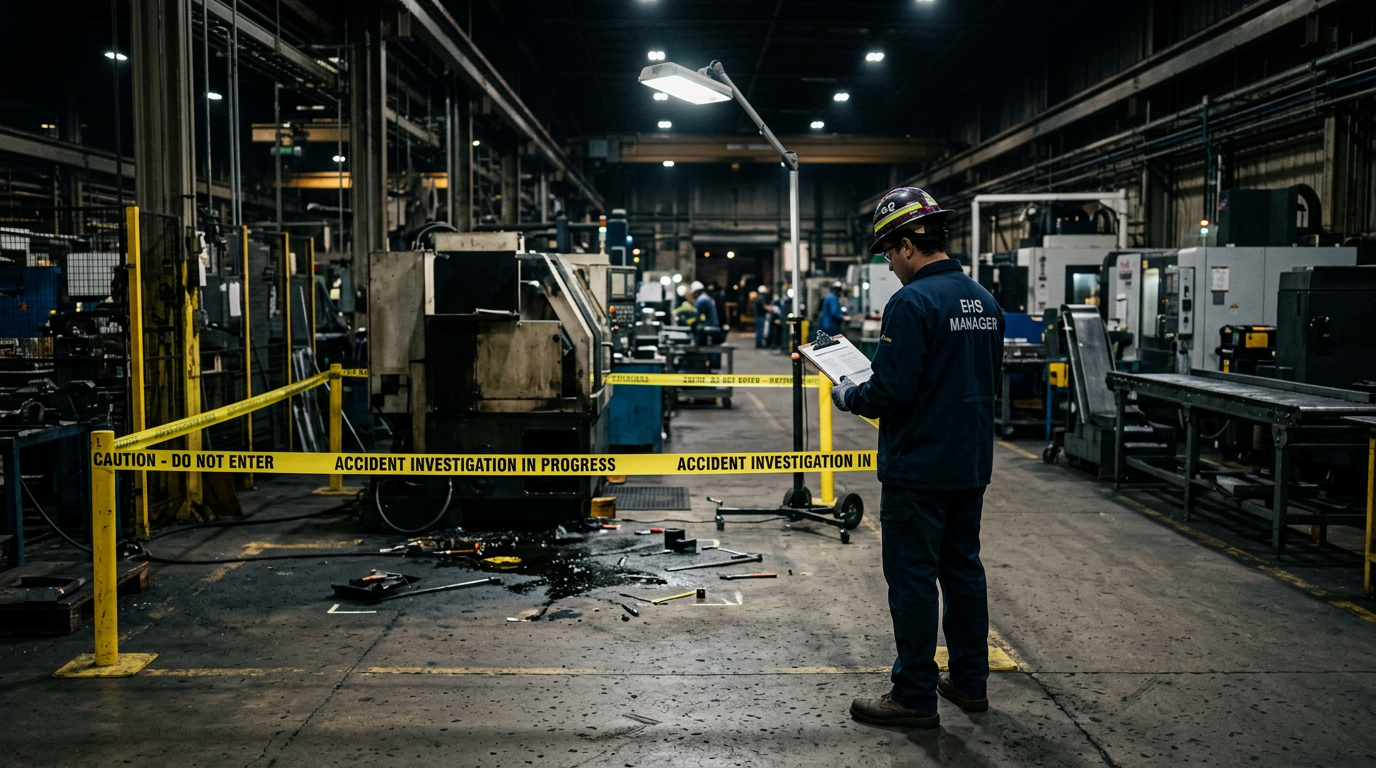
A key supplier just shipped nonconforming parts, failed an audit, or went quiet on a critical order. Your customer is waiting and your line may stop. This guide covers the first 24 hours, containment that actually protects your customer, how to issue a supplier corrective action request that gets a real answer, when to consider a second source, and how to build the supplier controls ISO 9001 Clause 8.4 expects so it doesn't happen again.
The Call Nobody Wants
It might be a receiving inspector holding up a failed part. It might be a customer complaint that traces back to a purchased component. It might be a supplier that failed your audit, or just stopped answering the phone on a critical order. However it arrives, a key supplier failure puts your delivery, your quality record, and your customer relationship at risk at the same time.
Under ISO 9001 Clause 8.4, you're responsible for making sure externally provided products and services conform to requirements. Your customer won't accept "our supplier did it" as an answer. What you do in the first day matters most.
The First 24 Hours: Contain
Containment comes before root cause. The goal is simple: make sure no more suspect product reaches your line or your customer.
Find all of it. Suspect material may be in receiving, in stock, in work in process, in finished goods, at an outside processor, in transit, or already at your customer. Identify the affected lots or date ranges and trace them.
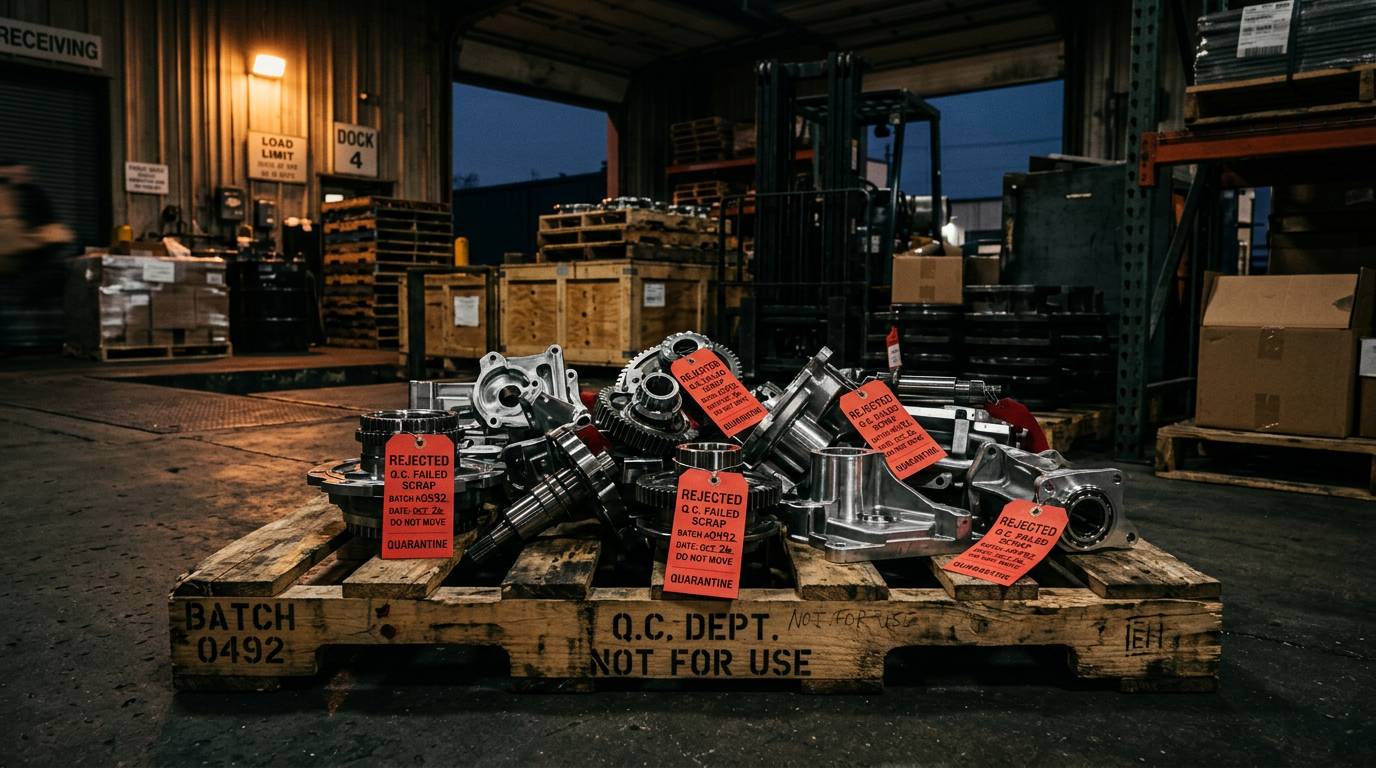
Quarantine and identify. Physically segregate suspect material and tag it. A red tag without segregation isn't containment.
Decide on customer notification. If suspect product may have shipped, your customer's requirements, and often your contract, will require prompt notification. Telling them early, with a containment plan, protects the relationship far better than being discovered.
Protect the schedule. Decide whether you can sort and use good product, rework, expedite replacement material, or use an alternate source.
Notify the supplier in writing, with specifics: part number, lot, quantity, the requirement, and the evidence of nonconformance.
Issue a SCAR That Gets a Real Answer
A supplier corrective action request (SCAR) asks the supplier to contain, investigate, correct, and prove the fix works. The quality of the answer often depends on the quality of the request.
Be specific. Include the requirement, what was found, how many parts, photos, measurement data, and the impact on you.
Set clear deadlines. A common pattern is containment confirmation within 24 to 48 hours, root cause and corrective action plan within a couple of weeks, and verification of effectiveness afterward. Put your deadlines in writing.
Require a structured response, such as 8D, so you get containment, root cause, corrective action, and verification in a consistent format.
Reject weak answers. "Operator error" and "retrained operator" are symptoms, not root causes. Ask why the process allowed the error, and what changed so it can't happen again.
Verify Before You Close
Don't close a SCAR on the supplier's word. Verify effectiveness with evidence: increased inspection on the next several lots, a review of the supplier's changed process, capability data, or an on-site visit for serious issues.
Keep the SCAR open until the problem stays fixed. Record the result in the supplier's performance history, because it should influence future sourcing and monitoring decisions.
Why It Happened: Look at Your Own System Too
A supplier failure is also a question about your supplier management process. ISO 9001 Clause 8.4 expects you to determine and apply criteria for evaluating, selecting, monitoring performance of, and re-evaluating external providers, based on their ability to provide conforming product.
Ask the uncomfortable questions. Was this supplier properly qualified for this part? Were the requirements, including drawing revision, special characteristics, and certifications, clearly communicated on the purchase order? Were warning signs, like late deliveries or earlier rejections, visible but ignored? Was receiving inspection appropriate to the risk?
In aerospace, automotive, and medical supply chains, standards like AS9100, IATF 16949, and ISO 13485 add further supplier control expectations, including flow-down of requirements and, in some cases, supplier development.
Build a Supplier Program That Prevents the Next One
Risk-based tiers. Not every supplier needs the same attention. Classify suppliers by the criticality of what they provide and their performance history, and set monitoring accordingly.
Qualification that means something. For critical suppliers, qualification should include capability evidence and, where appropriate, an on-site audit, not just a questionnaire.
Performance scorecards. Track quality, delivery, and responsiveness, and review them on a set cadence.
Escalation rules. Define what triggers increased inspection, a SCAR, a supplier audit, probation, or a second source.
Supplier audits. Audit your highest-risk suppliers on a schedule, and after significant problems.
Single-Source Risk
If this failure revealed that one supplier can stop your plant, treat that as a risk in its own right. Map your critical single-source parts. For each, decide whether to qualify a second source, hold strategic inventory, or strengthen monitoring. Qualifying a second source takes time, sometimes months in regulated industries, so it has to start before the next crisis, not during it.
How We Help
SupplySourceSync, our supply chain brand, is built around exactly this problem. We help you contain and resolve the immediate failure, then build a supplier management program with risk tiers, qualification, scorecards, escalation rules, and supplier audits, and train your team to run it independently.
If a key supplier just failed you, see our page on key supplier failures, or tell us what's going on.
Sounds like your situation?
“A key supplier just failed us”
See exactly how we approach this situation, what you'll have at the end, and request a Situation Review with our team.
Frequently Asked Questions
What should I do first when a supplier ships nonconforming parts?
Contain first. Quarantine the suspect material everywhere it may be, including receiving, stock, work in process, finished goods, and in transit. Then decide whether product that already reached your customer needs to be reported, and notify the supplier in writing.
What is a SCAR?
A supplier corrective action request (SCAR) is a formal request asking a supplier to contain a problem, find the root cause, correct it, and prove the correction works. It is usually structured using an 8D or similar problem-solving format.
Who is responsible if a supplier's part fails at my customer?
In most customer relationships, you are. ISO 9001 Clause 8.4 makes the organization responsible for controlling externally provided products and processes. That is why supplier selection, monitoring, and verification matter so much.
When should we find a second source?
Consider a second source when a single supplier is critical to your output, has repeated quality or delivery failures, or cannot show an effective corrective action. Qualifying a second source takes time, so start before the next crisis.