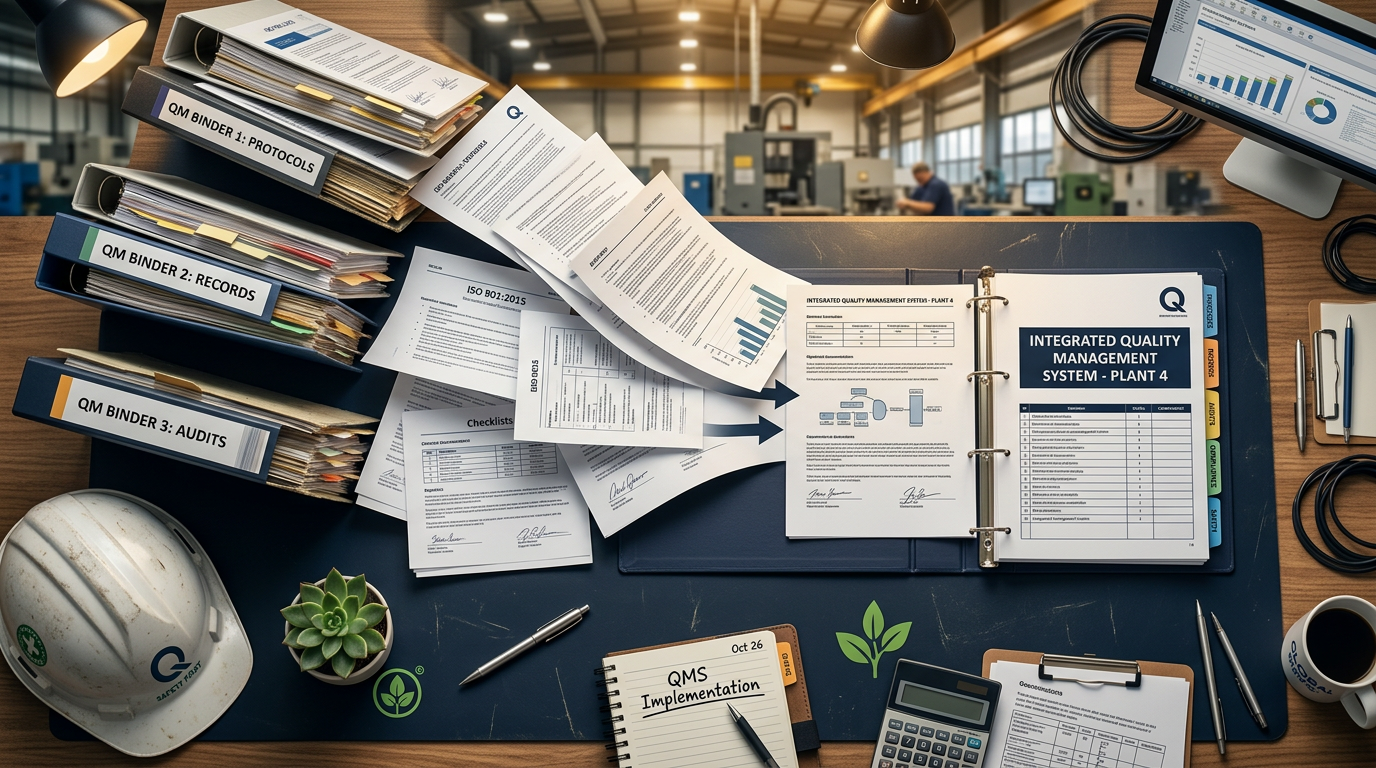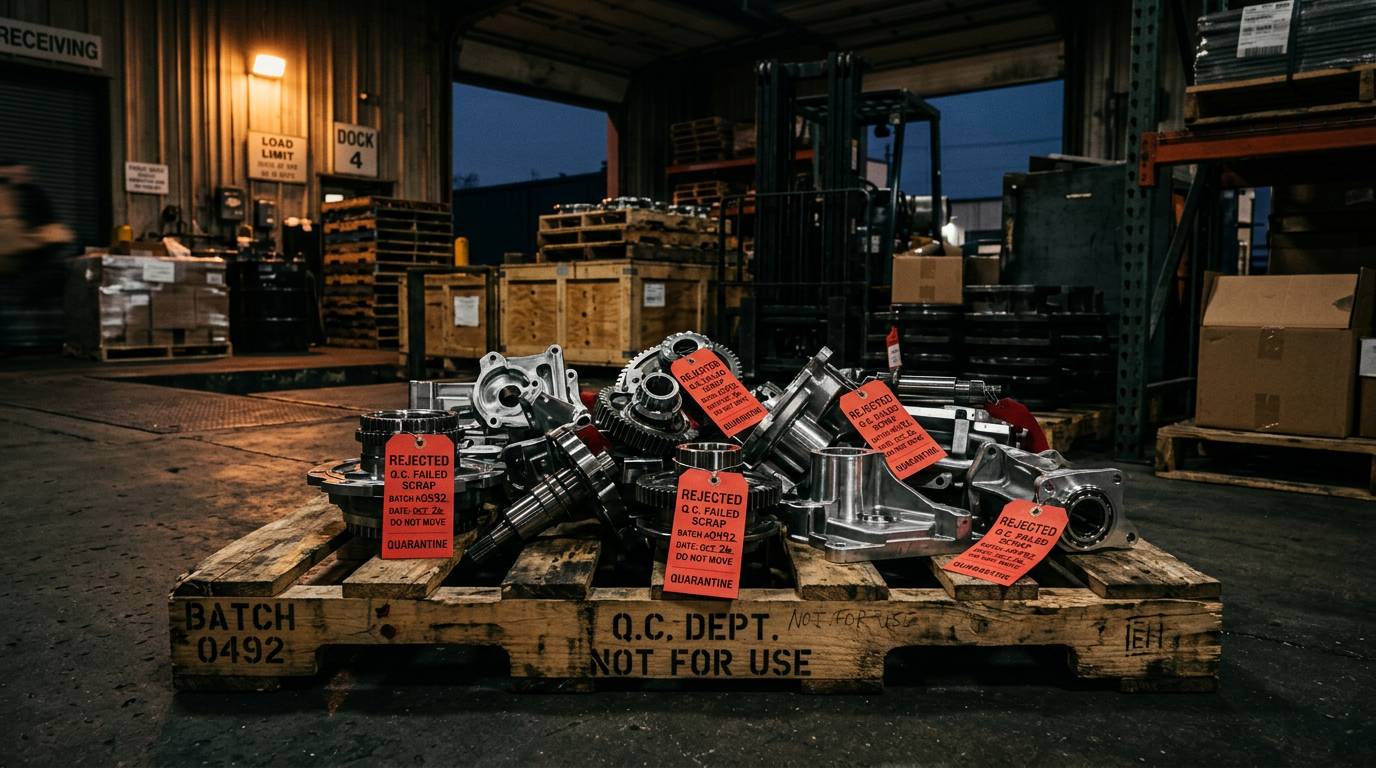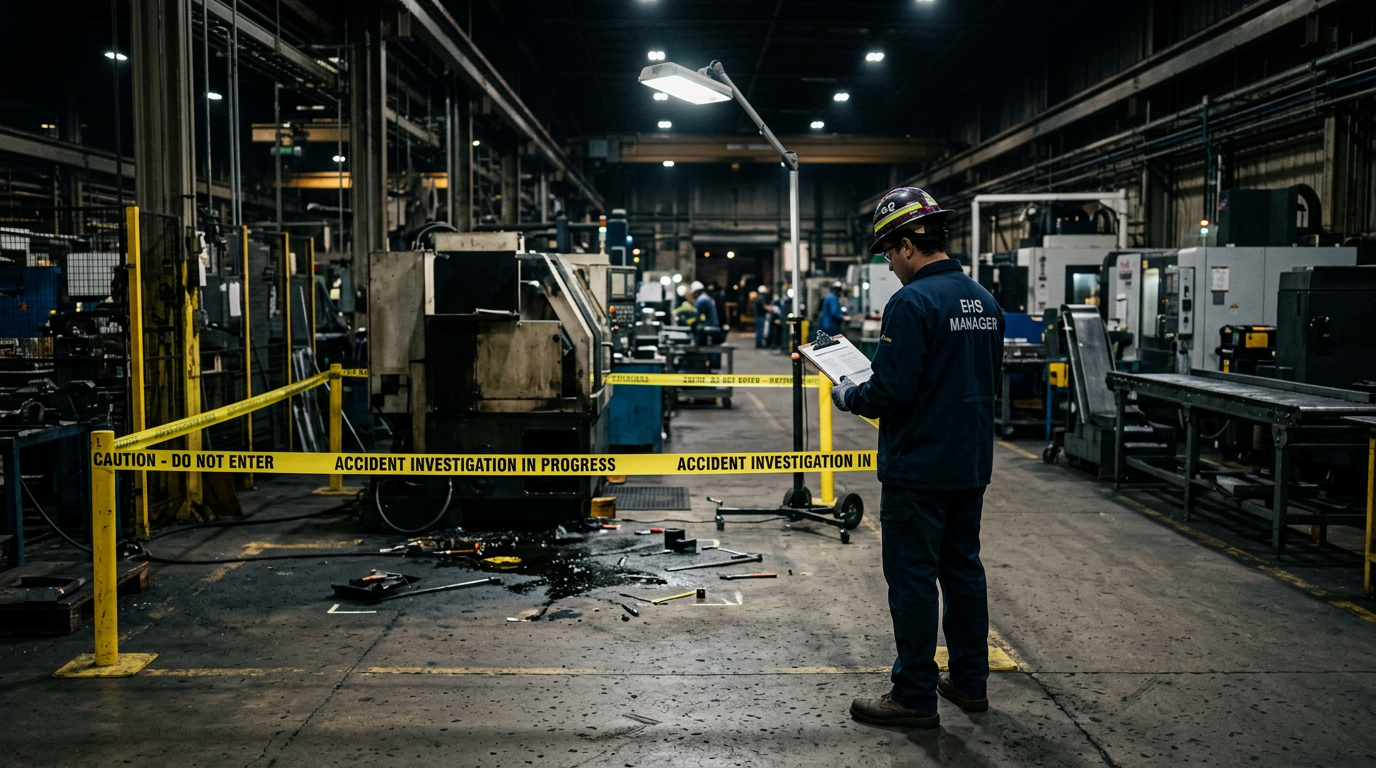

Environmental (ISO 14001) and occupational health & safety (ISO 45001) management systems share the same Annex SL structure — making integration not just possible, but highly efficient. An integrated EHS management system reduces documentation duplication by up to 40%, streamlines internal audits, and provides a single framework for managing environmental and safety risks. We combine these with ComplianceFortress EHS auditing to deliver complete regulatory compliance.
The Case for Integration
ISO 14001 (Environmental Management) and ISO 45001 (Occupational Health and Safety) share identical high-level structure based on Annex SL, making integration straightforward and highly beneficial. Manufacturers implementing both standards separately maintain duplicate management review processes, duplicate internal audit programs, duplicate document control systems, and duplicate corrective action processes.
Integrating both into a single EHS management system eliminates this duplication while providing more comprehensive protection for your workers and environment. ComplianceFortress designs integrated EHS systems that satisfy both standards through one set of procedures, one audit program, and one management review process.
Shared Structure and Requirements
ISO 14001 and ISO 45001 both require context of the organization analysis, leadership commitment, planning for risks and opportunities, support resources, operational planning and control, performance evaluation, and improvement. The structure is identical because both follow Annex SL — the common framework for all ISO management system standards.
The key differences lie in scope. ISO 14001 focuses on environmental aspects and impacts — your organization's interactions with the environment. ISO 45001 focuses on OH&S hazards and risks — threats to worker health and safety. An integrated system addresses both scopes through shared processes while maintaining the distinct focus each standard requires.
Implementation Approach
Start by developing a single EHS policy that addresses both environmental and safety commitments. Create one context analysis that identifies both environmental aspects and OH&S hazards. Build one risk assessment process that evaluates both environmental impacts and safety risks. Develop one set of operational controls that address both environmental protection and worker safety.
The integration points are natural. Emergency preparedness covers both environmental spills and workplace injuries. Training programs address both environmental awareness and safety procedures. Internal audits evaluate both environmental compliance and safety compliance. Management review considers both environmental performance and safety metrics.
Benefits Beyond Compliance
Integrated EHS management delivers benefits beyond regulatory compliance. Reduced audit fatigue — one integrated audit versus two separate audits. Lower documentation overhead — one set of procedures versus two. Simplified training — employees learn one system instead of two. Better risk management — environmental and safety risks are evaluated together, revealing interdependencies that separate assessments miss.
For manufacturers pursuing multiple ISO certifications, the integrated EHS system also shares structure with ISO 9001 quality management. Adding quality to the integrated system creates a comprehensive QEHS management system that addresses quality, environmental, and safety requirements through one unified framework.