The sensors are installed, the dashboards are live, the ERP went in last year — and decisions on the floor haven't changed. That's not a technology problem. It's a readiness problem: unstable processes, untrained people, and no link between data and daily decisions. This guide explains the real reasons manufacturing digital transformation stalls and a practical sequence to get value from the tools you already own before you buy anything else.
The Screens Are On. Nothing Changed.
The business case promised visibility, faster decisions, and less waste. The project went live. There's a dashboard on the wall, a new ERP or MES module, maybe sensors on the key machines. And yet the morning meeting runs the same way it always did. Operators still work from experience and paper. Supervisors still chase problems after the fact. The reports get generated, and nobody reads them.
If that sounds familiar, you're not unusual. Many manufacturing technology projects deliver the technology but not the change. The reasons are rarely about the software itself. They're about readiness: whether the processes, data, people, and management routines were ready to use what was installed.
Reason 1: The Process Wasn't Stable Enough to Measure
Technology measures what happens. If the process itself varies from shift to shift, operator to operator, and day to day, the data mostly shows noise. People look at a chart that jumps around, can't tell a signal from normal variation, and stop trusting it.
Before you can manage by data, the process needs a basic level of stability: standard work, defined methods, and known sources of variation under control. Lean and quality fundamentals come before digital tools, not after.
Reason 2: Nobody Trusts the Data
Downtime reasons are entered as "other." Cycle counts don't match production reports. Scrap is logged at the end of the shift from memory. Once people catch the data being wrong a few times, they stop using it, and they're right to.
Data quality is a management system, not an IT feature. Someone needs to own each data stream, the definitions need to be clear (what counts as downtime, what counts as scrap), and entry needs to be easy enough that people do it at the time, not later.
Reason 3: People Weren't Trained to Act on It
Most technology training teaches people which buttons to press. Very little teaches them what to do with what they see: how to read a trend, when to escalate, what a normal range looks like, and how data connects to their decisions.
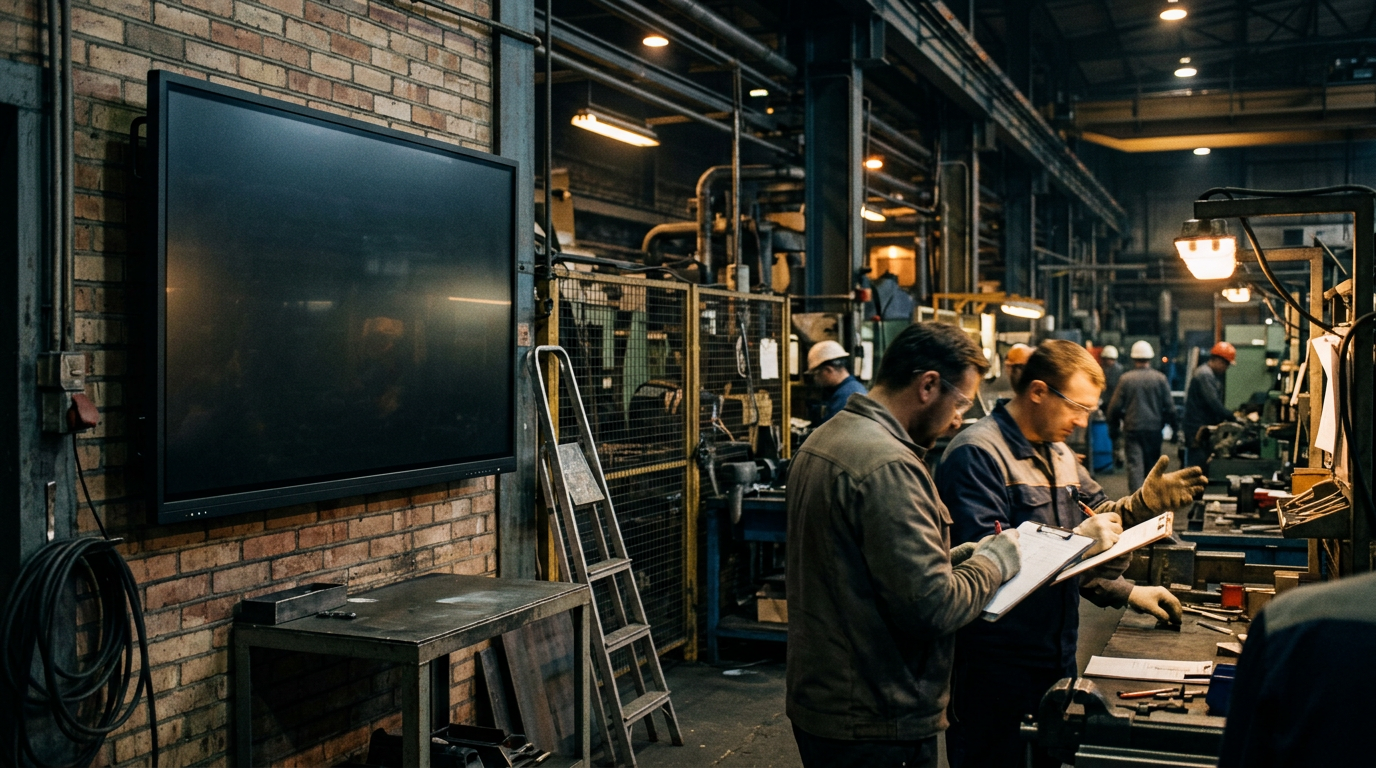
Data literacy is a skill for operators, supervisors, and managers alike. Without it, the dashboard is a television nobody watches.
Reason 4: The Tools Aren't Connected to Decisions
This is the most common and most fixable reason. Decisions in a plant happen in specific places: the shift start meeting, the daily production meeting, the escalation process, the weekly quality review, and the monthly operations review. If the new technology isn't built into those routines, it runs in parallel with them, and the old routines win.
Ask a simple question about every screen and report: which meeting uses this, who looks at it, and what decision does it change? If there's no answer, the tool isn't connected to the business.
Reason 5: Technology Was Bought Before the Problem Was Defined
Many projects start with a solution: a vendor demo, a peer's recommendation, or a board directive to "do Industry 4.0." The problem it's supposed to solve is defined loosely, if at all. Without a clear problem and a measurable target, nobody can tell whether the project succeeded, and nobody owns the outcome after go-live.
A Readiness-First Sequence
The fix is usually not more technology. It's putting the steps in the right order.
Define the decisions. List the few decisions that matter most for safety, quality, delivery, and cost, and who makes them.
Stabilize the process. Put standard work and basic controls in place on the processes you want to measure.
Fix the data. Assign owners, clarify definitions, and make entry easy and timely.
Connect to routines. Build the existing tools into the daily and weekly meetings where those decisions happen. Start small: one line, one meeting, one metric.
Train for action. Teach people what the data means and what to do about it, not just how to log in.
Measure decisions, not screens. Track whether decisions are faster, better, or more consistent. That's the real return on the investment.
Only then consider new technology, with a clear problem and a readiness check first.
Before the Next Technology Investment
If your last project underdelivered, the next one will be harder to fund. Protect it with a digital readiness assessment: an honest look at process stability, data quality, data literacy, and governance. It tells you what needs to be fixed before or alongside the next purchase, so you're buying results, not screens.
How We Help
OPZ360, our digital transformation brand, starts with readiness rather than technology. We score where your processes, people, and governance actually stand, connect the tools you already own to your daily management routines, train your team to act on data, and measure whether decisions change on the floor.
If you bought the technology and nothing changed, see our page on technology that didn't change the floor, or tell us what's going on.
Sounds like your situation?
“We bought the tech and nothing changed on the floor”
See exactly how we approach this situation, what you'll have at the end, and request a Situation Review with our team.
Frequently Asked Questions
Why do most manufacturing digital transformation projects fail?
Most stall because the technology arrives before the organization is ready. Processes are not stable enough to measure, data is not trusted, people are not trained to act on it, and nobody connects the new tools to the daily meetings where decisions actually happen.
Should we buy new software if the current system is not working?
Usually not first. Diagnose why the current tools are not being used. If the root cause is process instability, data quality, training, or governance, new software will inherit the same problems.
What is a digital readiness assessment?
A digital readiness assessment scores whether your processes, data, people, and governance can support a technology investment. It identifies what needs to be fixed before or alongside new tools so the investment produces results.
How do we know if our technology is delivering value?
Look at decisions, not screens. If shift meetings, escalations, and quality reviews are using the data to make faster or better decisions, the technology is working. If the dashboards are live but nobody acts on them, it is not.