
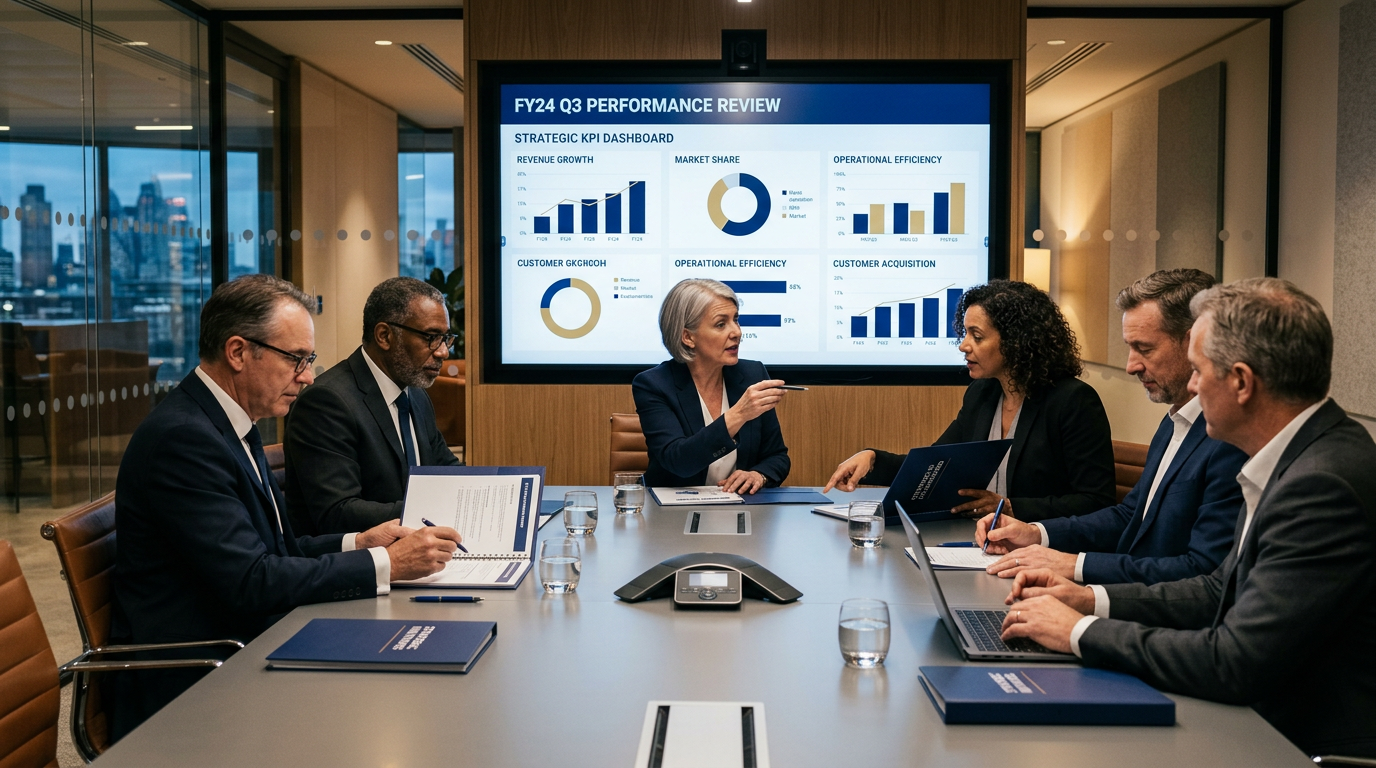
For most manufacturers, management review is a once-a-year ritual: a slide deck assembled the week before the audit, a meeting nobody remembers, and minutes filed away until next year. That is a massive missed opportunity. Done right, management review is where leadership actually steers the management system. We explain how to transform management review from a compliance checkbox into a genuine decision-making forum: what inputs ISO 9001 Clause 9.3 actually requires and how to make them meaningful, how to structure the meeting so leaders engage with quality data instead of tuning out, how to turn review outputs into resourced actions with owners, and how to run shorter, more frequent reviews that keep the system responsive. Includes an agenda template and the outputs auditors expect to see.
From Ritual to Steering Wheel
For most manufacturers, management review is an annual ritual: a slide deck assembled the week before the certification audit, a meeting that leaders endure rather than engage with, and minutes filed away until the same scramble repeats next year. It satisfies the auditor and accomplishes nothing else. That is a profound waste, because management review is the one place in the standard where leadership is supposed to actually steer the management system.
Done right, management review is where the data comes together, where leaders confront what is working and what is not, and where decisions get made about resources, priorities, and direction. The difference between a review that drives improvement and one that just passes the audit is not the agenda — it is whether leadership treats it as a genuine decision-making forum or a compliance chore. Everything else follows from that choice.
What Clause 9.3 Actually Requires
ISO 9001 Clause 9.3 specifies a substantial set of inputs, and understanding them is the first step to making the review meaningful. The required inputs include the status of actions from previous reviews, changes in internal and external issues relevant to the system, information on quality performance (including customer satisfaction, objectives, process performance, nonconformities, audit results, and supplier performance), the adequacy of resources, the effectiveness of actions taken to address risks and opportunities, and opportunities for improvement.
Most reviews present these inputs as static reports — here is the complaint count, here is the audit list — and leaders tune out. The upgrade is to present each input as a trend with a story: not "we had twelve complaints" but "complaints are up thirty percent, concentrated in one product line, driven by one failure mode — here is what we propose." When inputs arrive as insight demanding a decision rather than data demanding acknowledgment, leaders engage.
Structuring a Meeting Leaders Engage With
The format of the review determines whether leaders participate or endure. Send the data in advance so the meeting is spent on discussion and decisions, not on reading slides aloud. Organize the agenda around the questions leadership actually cares about — are we meeting our objectives, where are our biggest risks, what needs resources — and connect quality data to business outcomes leaders feel. Frame quality performance in terms of cost, customer retention, and risk, not just clause conformance.
Keep it focused. A review that drowns leaders in fifty slides of minutiae guarantees disengagement. Present the vital few metrics and trends, highlight what changed and what it means, and reserve time for genuine discussion. The measure of a good review is not how much was presented but how many real decisions were made — decisions about priorities, resources, and direction that would not have happened otherwise.
Turning Outputs Into Action
Clause 9.3 requires outputs — decisions and actions related to improvement opportunities, changes to the system, and resource needs. This is where most reviews fail: they generate discussion but no owned, resourced, tracked actions. Every review output should become an action with a named owner, a due date, and a place in your tracking system, then appear as "status of previous actions" at the next review. That single loop — outputs become tracked actions, tracked actions get reviewed — is what makes management review a driver of improvement rather than a recurring conversation.
Consider running shorter, more frequent reviews — quarterly, even monthly for key metrics — instead of one annual marathon. Frequent reviews keep the system responsive, surface problems while they are still small, and make each meeting shorter and more focused. The annual comprehensive review still happens, but it confirms and adjusts rather than discovering a year's worth of drift at once. An agenda template and disciplined follow-through turn Clause 9.3 from a checkbox into the leadership steering wheel it was designed to be.