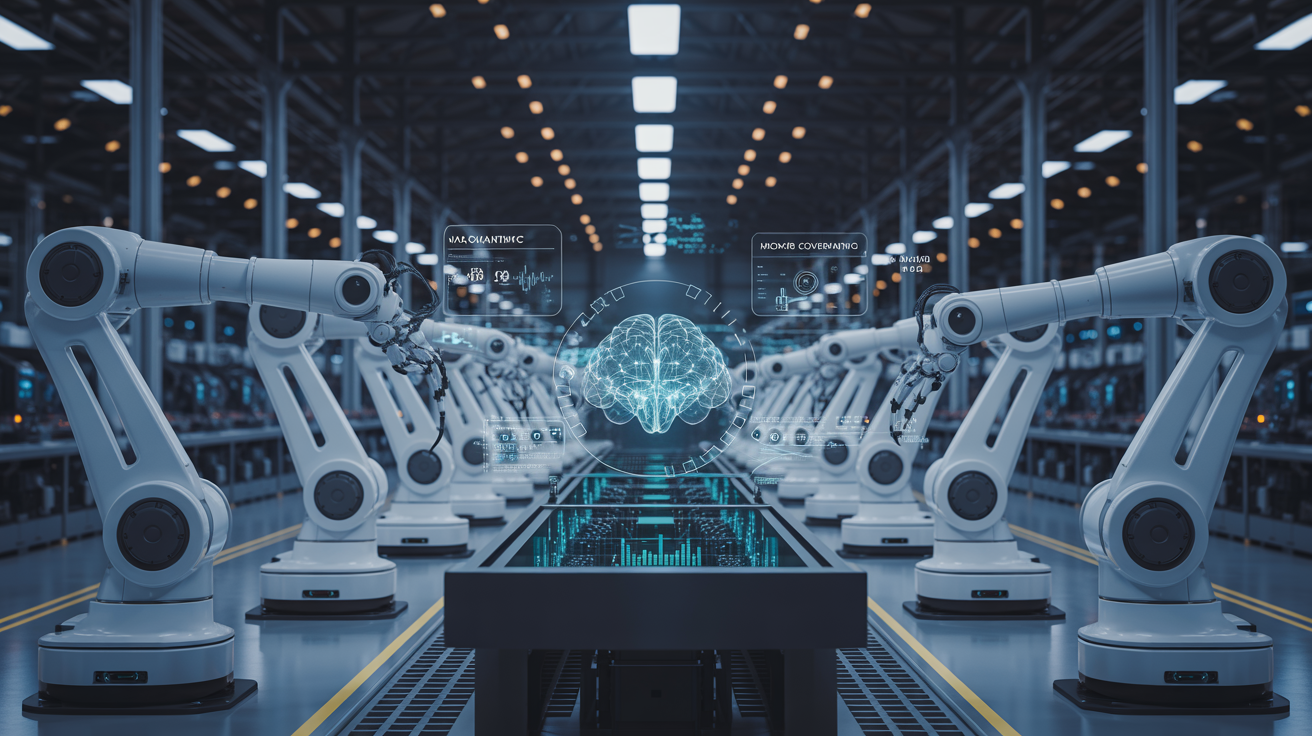
The EU AI Act is law. US executive orders are shaping procurement requirements. ISO 42001 is the world's first international standard for AI management systems — and manufacturers using AI for visual inspection, predictive maintenance, demand forecasting, or process optimization need to pay attention. We explain what ISO 42001 requires, which manufacturing AI applications are highest risk, and how to integrate AI governance into your existing ISO management system framework.
AI in Manufacturing Is Here
Artificial intelligence is rapidly entering manufacturing operations — from predictive maintenance and quality inspection to demand forecasting and supply chain optimization. But AI in manufacturing introduces risks that traditional quality management systems were not designed to address. Algorithm bias, data quality issues, model drift, and lack of explainability create new categories of risk that ISO 42001 specifically targets.
ISO 42001 provides the first international standard for AI management systems, giving manufacturers a structured framework for governing AI deployment responsibly. For manufacturers already certified to ISO 9001 or other management system standards, ISO 42001 integrates naturally into existing systems.
Why Manufacturers Need AI Governance
Manufacturers using AI for quality inspection face a critical question: how do you prove to auditors and customers that your AI system is reliable? Traditional SPC and MSA methods do not apply directly to machine learning models. ISO 42001 provides the governance framework that addresses this gap — requiring documented AI risk assessments, performance monitoring, and human oversight mechanisms.
The EU AI Act, effective for US manufacturers exporting to Europe, classifies certain manufacturing AI applications as high-risk systems requiring conformity assessments. ISO 42001 certification positions manufacturers to demonstrate compliance with these emerging regulatory requirements before they become mandatory.
Integration With Existing Systems
ISO 42001 follows the same Annex SL structure as ISO 9001, ISO 14001, and ISO 27001, making integration with existing management systems straightforward. Your existing management review process expands to include AI performance metrics. Your internal audit program adds AI governance to its scope. Your risk assessment process incorporates AI-specific risks.
OPZ360, our digital transformation brand, specializes in helping manufacturers integrate AI governance into their existing management systems. This integration approach is far more efficient than building a standalone AI governance program from scratch, and it leverages the management system maturity you have already achieved.
Getting Ahead of Regulation
Regulatory requirements for AI in manufacturing are expanding rapidly. The EU AI Act applies to US manufacturers exporting AI-enabled products to Europe. NIST AI Risk Management Framework provides voluntary guidance that may become mandatory for government contractors. Customer-specific AI governance requirements are emerging in aerospace, automotive, and medical device supply chains.
Manufacturers who implement ISO 42001 now position themselves ahead of these regulatory requirements. Early adoption demonstrates AI governance maturity to customers, regulators, and auditors — creating competitive advantage while the regulatory landscape solidifies.