As manufacturing becomes increasingly digital, cybersecurity is essential. ISO 27001 is the framework to protect your data.
Why Manufacturers Need Information Security
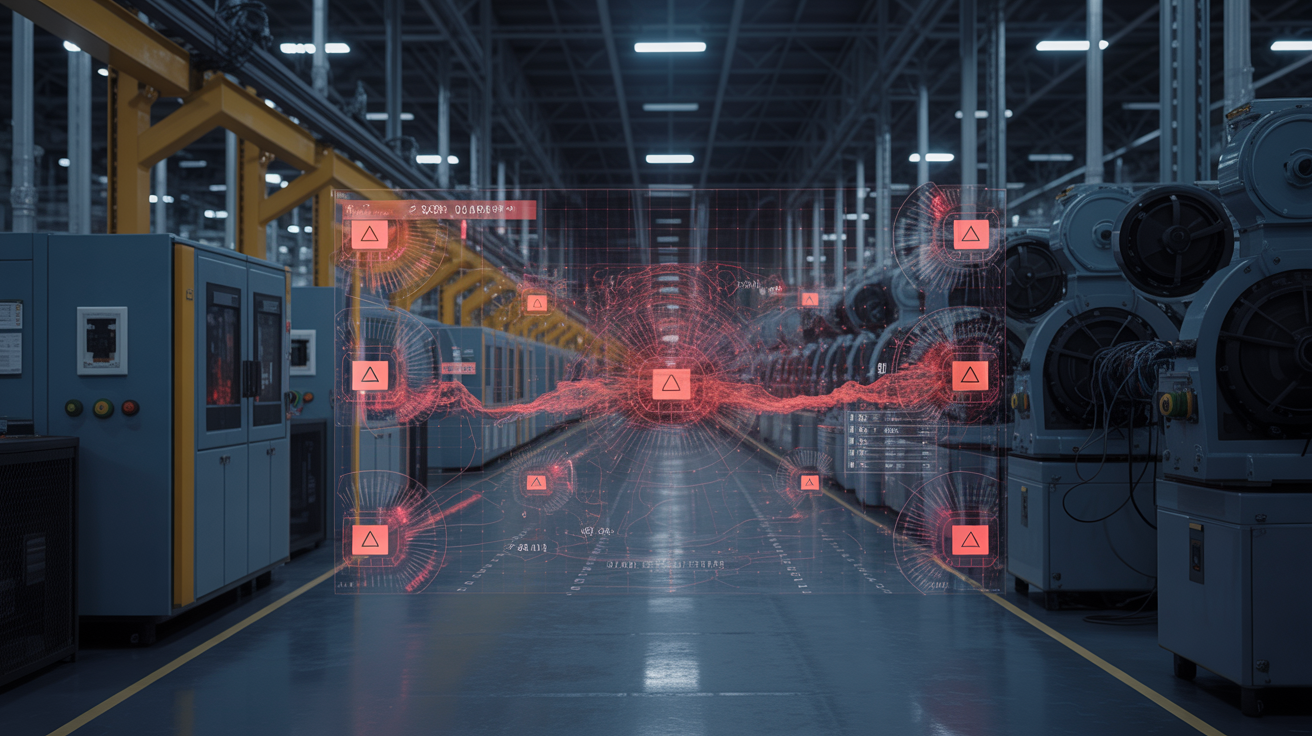
Manufacturing has become the number one target for cyberattacks, surpassing financial services and healthcare. Ransomware attacks on manufacturers increased dramatically in recent years with average recovery costs exceeding two million dollars. Intellectual property theft, supply chain data compromise, and operational technology attacks threaten both business continuity and customer relationships.
ISO 27001 provides a systematic framework for managing information security risks. For manufacturers, this means protecting not just IT systems but also operational technology, intellectual property, customer data, and supply chain information. As ISO 27001 certified auditors, we bring both implementation and auditing expertise to every engagement.
Manufacturing-Specific Challenges
Manufacturing environments present unique information security challenges. OT networks controlling production equipment often run legacy software that cannot be patched. IoT sensors generate data flowing between shop floor and cloud. Engineering files containing proprietary designs are shared with suppliers and customers. ITAR-controlled technical data requires additional protection layers.
ISO 27001 addresses these challenges through risk assessment, control selection, and continuous monitoring. The standard does not prescribe specific technical controls — it requires you to identify your risks and implement appropriate controls based on your specific environment and threat landscape.
Implementation Roadmap
A practical ISO 27001 roadmap for manufacturers includes five phases: asset identification to determine what information needs protection, risk assessment to identify threats and vulnerabilities, control selection to determine appropriate safeguards, implementation to deploy selected controls, and monitoring to verify controls remain effective.
For manufacturers, asset identification must include OT systems, engineering data, quality records, supply chain information, and customer-furnished data. Risk assessment must consider both cyber threats and physical threats. Control selection must balance security with operational requirements — you cannot lock down a CNC machine the same way you lock down a laptop.
Beyond Certification
ISO 27001 certification demonstrates your commitment to information security, but the real value is the security culture it builds. When every employee understands their role in protecting information — from the shop floor operator who locks their workstation to the engineer who encrypts files before sharing — your security posture improves dramatically.
For manufacturers serving defense, aerospace, and automotive customers, ISO 27001 also builds the foundation for CMMC, NIST 800-171, and customer-specific security requirements. Invest once in ISO 27001 and you are 70 percent of the way to these additional frameworks.